

Introduction
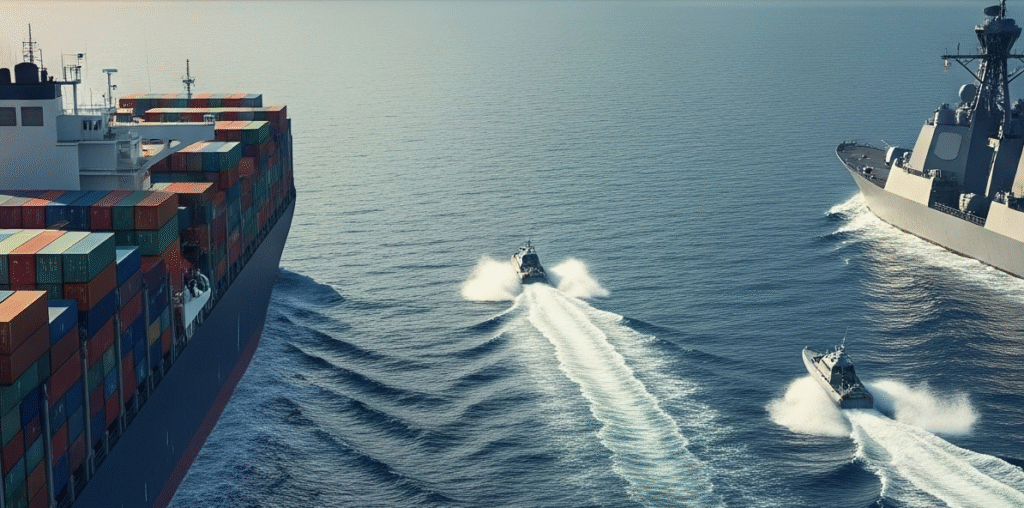
The Red Sea Crisis has become one of 2025’s most significant challenges for international trade. This crucial waterway, located between Africa and the Arabian Peninsula, links the Mediterranean Sea to the Indian Ocean via the Suez Canal, handling approximately 12% of worldwide commerce. Currently, political unrest, attacks on vessels, and regional conflicts have transformed this essential shipping route into a dangerous zone for maritime companies and international supply networks.
What Is the Red Sea Crisis?
The Red Sea Crisis describes a collection of maritime traffic disruptions primarily triggered by security dangers in and around the Bab el-Mandeb Strait — the narrow passage separating Yemen, Djibouti, and Eritrea.
This shipping lane serves as a crucial route for petroleum tankers, cargo vessels, and freight carriers moving between Europe and Asia. The situation worsened during late 2023 and throughout 2024 as attacks on merchant ships escalated.
Timeline of the Red Sea Crisis
2023 – Occasional attacks on maritime traffic in the Bab el-Mandeb Strait.
Early 2024 – Houthi forces in Yemen started targeting ships connected to Western or allied countries.
Mid 2024 – Maritime insurance costs doubled as transit risks through the Red Sea increased dramatically.
2025 – Several shipping corporations declare long-term rerouting around Africa’s Cape of Good Hope.
Causes of the Red Sea Crisis
1. Political Unrest in Yemen
Yemen’s continuing civil conflict has fostered conditions for piracy and extremist activities, especially from the Houthi faction.
2. Regional Power Struggles
Iran’s suspected backing of the Houthis has introduced a proxy war element, with Saudi Arabia and the UAE supporting the opposition.
3. Maritime Protection Deficiencies
Insufficient naval coverage in key areas has left commercial ships exposed to rocket, drone, and boarding assaults.
How the Red Sea Crisis Disrupts Global Shipping
Rerouting via Cape of Good Hope – Vessels bypassing the Red Sea encounter an extra 10–14 days of journey time and up to 3,500 additional nautical miles.
Elevated Shipping Expenses – Marine insurance costs have jumped from 0.3% to as much as 1% of a vessel’s complete value.
Fuel Usage – Extended routes demand considerably more fuel, raising both carbon footprint and operational costs.
Economic Impact of the Red Sea Crisis
The situation creates widespread effects beyond the maritime industry:
Automotive Industry – Manufacturing delays in Europe as components arrive behind schedule.
Technology – Extended delivery times for consumer devices.
Energy – Possible price increases as fuel shipments experience disruptions.
Impact on the Suez Canal and Egypt’s Economy
The Suez Canal generates a substantial portion of Egypt’s international revenue. Decreased ship traffic resulting from the Red Sea Crisis has severely reduced toll collections, endangering Egypt’s economic health and currency reserves.
Geopolitical Consequences
The Red Sea has become a central location for major power rivalry:
United States – Enhanced naval presence through Operation Prosperity Guardian.
China – Safeguarding commercial routes connected to its Belt and Road Initiative.
Russia – Using instability to grow its influence in the Horn of Africa.
Operation Prosperity Guardian and International Response
A partnership of Western and regional naval forces has been assigned to guarantee secure transit through the Red Sea. Although the mission has prevented some incidents, numerous shipping firms continue choosing the extended Cape of Good Hope passage due to safety concerns.
Possible Resolutions and Future Outlook
Peace Negotiations – Resolving Yemen’s conflict remains the most effective long-term approach.
Enhanced Naval Security – Protected convoys could reduce immediate dangers.
Alternative Pathways – Land-based pipelines and railway systems might circumvent maritime bottlenecks in coming years.
Frequently Asked Questions
Why is the Red Sea important for global trade?
It connects Europe to Asia through the Suez Canal, eliminating thousands of miles compared to traveling around Africa.
How much does rerouting cost shipping companies?
Expenses differ but can increase annual costs by millions of dollars in additional fuel, salaries, and insurance fees.
Will the Red Sea Crisis affect consumer prices?
Absolutely — shipping disruptions and expenses can drive up costs for products from electronics to energy.
Conclusion
The Red Sea Crisis extends beyond a local security concern — it represents a worldwide trade and economic obstacle. As conflicts continue, industries, nations, and consumers across the globe will keep experiencing its effects. For current updates on international trade disruptions, follow Geonomix.